
Okay, let’s cut to the chase. All those distractions that I’ve been writing about? Aren’t they all too often just a mask for the real issues, the distractions that originate from deep within ourselves? These are the ones that we are not admitting, are not facing. What’s often really going on is pure avoidance. We just can’t bring ourselves to face our work. Avoidance can come from many causes. Fear–of failure, of not measuring up, of exposure, of rejection–is common. My own avoidance comes mostly from dread of hard work. Because writing is most definitely hard work, even when it’s fun.
 Avoidance can also arise from a distaste for one’s current project. That may be a sign that the project should be shelved. Since writing is hard work, you should at least be working on something that engages you. Entire rooms of books have been written on fear and other causes of procrastination. I can’t add anything to the help they might provide in overcoming the emotional roadblocks to our progress. What I will suggest, even urge, is this: locate the Christopher Fowler short story “The Cages.” It’s included in his collection Personal Demons. The story is a chilling and brilliant allegory for how we sabotage ourselves. For anyone who has ever wondered in dismay, “how did things end up like this?” this story gives an answer.
 We’ve all been there. Ready (we think) to write, when we notice we’re (pick one) hungry, cold, itchy, achy, sleepy, hot or thirsty. Yet, there have also been times when I’ve been in “the zone” and any minor physical distractions have faded away. A couple of hours later, I’ll come out of my trance to realize I haven’t eaten in hours or that my back is aching and I need to stretch. In addition to physical irritants, there are the environmental ones. The garbage trucks roaring and rumbling down the street. Poor lighting. The message light blinking on the answering machine. Yet again, there are times when I have been in the throes of what I know is good work and I’ve become oblivious to a loud party in the next room. It’s all too easy to let annoyances become excuses for putting off our work. But they don’t necessarily have to be. A gripping idea, a looming deadline or a short window of opportunity to write can help us push through or ignore temporary discomforts. Barring those incentives, just start. Those distractions will always, always beset us. Fix them if you can, without, say, insisting that only a five course meal will do. Put on a sweater or open a window. Then just start. Procrastination, for any reason, all too easily becomes a habit, a pattern of behavior. At some point, despite whatever delays or annoyances we have, we just have to start.
 Unless you can retreat to a mountain cabin (and even if you do), there will be the danger of distractions. Even in the mountain cabin, there will be a buzzing fly or an aching tooth. Many writers like to work in a café or a library, to get away from ringing phones, pets and family members, who, as much as they love you, just don’t get it. That sometimes works for me. Truth is, I prefer the comforts of working at home. But, lordy, that’s where the distractions are everywhere, and sprout constantly. Yet, even at home, there are environmental changes I’ve come up with (some on the advice of friends) that, small as they are, have made a substantial difference in my ability to focus.
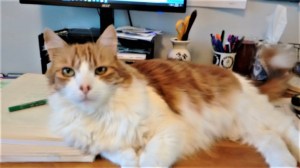 My cat is old now and after his breakfast and a bit of play time, I can count on him to settle down in his basket by the window. But then, after a while, he wakes up and seeks me out to demand petting time. I’ve learned that, writing or not, I may as well give in. He will win. He always wins. He has his ways–persistence, pestering, entitlement, confidence, or simple obstruction. He’s predictable in his habits (aren’t we all) and I’ve learned from experience that the interruption will only last for 20 minutes or so. Still, it’s hard to regain momentum, to recapture where I was in my writing when I was forced to leave off. Life is full of such challenges. That will never change. It’s up to us writers to figure out how to deal with them.







 Having made all those comments encouraging each of us not to compare ourselves with other writers, I admit to being the worst offender. It seems to be human nature to do this, and maybe there’s not really much we can do to control it in ourselves. In “The Death of Ivan Ilych,” Tolstoy (that genius) writes “. . . the mere fact of the death of a near acquaintance aroused, as usual, in all who heard of it the complacent feeling that, ‘it is he who is dead and not I.'” (Emphasis mine.)
 My favorite quote in relation to making comparisons, however, is from “Desiderata,” Max Ehrmann’s classic poem. “If you compare yourself with others, you may become vain or bitter, for always there will be greater or lesser persons than yourself.” In fact, nearly every line of this poem can be taken as advice for writers. It’s worth re-reading from that perspective, interpreting those lines as advice to authors. Try it.
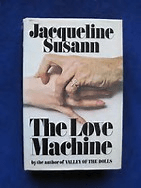 There is a famous incident about Jacqueline Susann. She was on an episode of The David Frost Show, which aired on July 16, 1969, promoting her novel The Love Machine. After a discussion of Susann’s appeal and business tactics, a critic, John Simon, spoke up. He demanded to know whether Susann was trying to write art or trash. Jackie did the best she could to counteract his apparently hostile challenge and the exchange became heated and snarling. What I wished then, and now, is that someone had brought up the obvious point. Those are not the only two choices and I refuse to be trapped into thinking they are. I refuse to accept what is a false dichotomy. John Simon, it seemed to me, was just trying to create a stir. Whether he intended to hurt Ms. Susann, I have no idea. But I would have wanted to ask him, “Okay, in which category do you place
 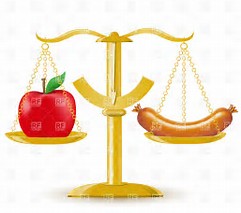 Very few of us writers will end up in the same class as either, say,
  Ordinary People [by Judith Guest].” Meanwhile, most of her friends would have killed to have had her level of success. Sure, we all want to be the best writers we can be. But writing quality, like quantity, is all on a continuum and we each have our place on it.
 Occasionally my electric company sends me a charming, colorful letter informing me that I am using far, far more electricity than most of my neighbors who live in dwellings of a similar square footage to mine. The flyer includes “tips” on how I can use less. I can only surmise this is the same tactic employed by traffic control officers when they put those “your speed” signs along surface streets. Studies have shown that those signs do indeed cut down on speeding. But if this electric company letter is meant to shame me or increase my self-monitoring of electric use, and thereby help me cut back, it’s not working. We’re all for saving energy, but we’re already doing all we can, including the measures suggested by the flyer. But, consider this: I know my neighbors. Many of them are single. We, on the other hand, are a two person household. All of them work at jobs outside the home, so they’re gone all day during the week. A couple of them travel extensively, sometimes being away for a month at a time. Of course they are using less electricity at home than we are. If any of them retires, or adds a partner or other person to the household, their home usage will likely increase. Suddenly it will appear as though I have “improved,” relative to others, when in fact I haven’t changed a thing. Comparisons, with little or no context, mean nothing.
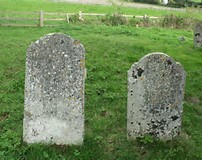 “Remember me as you pass by, As you are now so once was I, As I am now so you will be, Prepare for death and follow me.”
 A couple of years ago I entered a short story contest. There were three anonymous judges. Since they were anonymous, I have no idea whether they were editors, fellow writers, agents, writing teachers or other. Even though this was a no-fee contest, each entrant still got a summary of the scores. I did not win. But it was the scores that were illuminating. One judge loved the story and gave it the highest marks on all criteria. Another judge felt the opposite and gave it all low marks on each point. The third judge graded the score right down the middle, halfway between excellent and not worth the paper it was printed on.
 I got another story back a few days ago. No surprise. I had sent it to a top market where there’s a ton of competition from big name authors. Nevertheless it’s always worth a try. (Well, almost always.) Within days of the rejection, I had that story out to another publication. This is one case where I know the advice from successful writers is spot on, and I act on it as conscientiously as I can. Know the markets, keep your best work circulating and keep good records of where stories have been. It’s about increasing your chances of acceptance. It’s about keeping hope alive.





 Lida Bushloper