

I was talking with an acquaintance yesterday. I’m not sure how this topic came up, but he mentioned that there were two books that he re-read at least once a year. One was Victor Frankl’s Man’s Search for Meaning

The other was A River Runs Through It, by Norman Maclean. My friend read them to be reminded of principles he wants to live his life by. Believers in religious faiths, of course, re-read their sacred texts often. But there are other books that deserve to be re-read as well. As our life experiences change us, as our circumstances change, some books speak to us in a different way each time we read them.

For me, as I’ve mentioned before, it’s Antoine de St. Exupery’s Night Flight As I said in my last post, it’s hard enough to find time to fill in the gaps of unread books in the oeuvres of our favorite authors.
To find time to re-read meaningful works is also a challenge. But they don’t have to be long works. None of the three I’ve cited here are long. It can be a poem or story. It can be any work that re-focuses our attention on our values, our goals, our vision for ourselves, or what’s most important in life. If you, reader, have any book that does this for you, I’d love to know what it is.
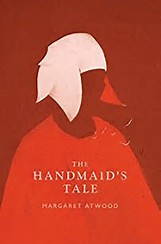


 , an early work by Anne Tyler. With new, wonderful books coming out every day, it can be hard to find time to go back and fill in blank spots in a beloved writer’s oeuvre. But I squeeze them in when I can. Very worthwhile.
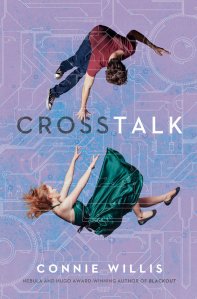 I hope you have time to read this long, but brilliant and lively
 In my last couple of posts, I’ve talked about how other writers may help us in many ways, but it’s still up to us to do the actual work. There’s no better illustration of this than a deeply embarrassing incident from my early days as an aspiring writer. I had been publishing book reviews in the local paper, when a fellow I knew from writing class mentioned that the biggest paper in town had just hired a New York mover and shaker as their new book editor. I should send in a query, he said. Her name was Ellen Parker. (This is not really that editor’s name. I’m still too chagrined to admit who it really was.) I dutifully crafted a query, attached some published samples and sent it off to said mover and shaker at the paper. Never heard a word back. No surprise there. Big paper, lots of competition, already an established stable of contributors, etc. But then I saw her name in print: L.N. Parr-Kerr. Sheesh. I thought I knew what I had heard, but never bothered to follow up with fact-checking. Now I follow the advice from the old tailor’s saying: measure thrice, cut once. I check and re-check names, titles, requirements. Maybe given the odds, I wouldn’t have gotten an assignment anyway. But why take a chance on sabotaging one’s chances with a bad first impression? Lesson learned.
 Last post I talked a bit about how we writers have to carry our own load of work. That doesn’t mean, however, that writers can’t help each other. In fact, our generosity to each other is one of our best traits. Here are three examples. When I was just starting out, I attended a small summer workshop in my writing teacher’s home. There I met a woman who was writing book reviews for the local paper. She thought I was a good writer, and offered to introduce me to her editor. He liked my samples and I became a regular book reviewer, which led to a twice monthly column, which led to assignments interviewing several local newsmakers.
 In one of my former writer’s groups, I was the only member who focused on poetry as well as fiction and essays. Yet, I was stunned when one day at the meeting another woman read a poem, turned to me and asked where she should send it. Since I had actually published poetry, she thought I was an expert. I scanned my brain for a response that wouldn’t be harsh, then explained that her poem was in a different style than I wrote in, and so the markets I submitted to would not be appropriate for her piece. But what I really wanted to say was, “Hey, I work my buns off to market my work. Have you even tried to find a market yourself?” I’m not selfish. I like giving a helping hand to fellow writers, as they certainly do for me. I don’t think this woman, otherwise a sweet lady, was lazy. I think she was just naïve and had not the faintest idea of the effort needed to publish poetry. I don’t think she realized there are hundreds of markets for poetry out there, that I couldn’t possibly know them all, nor could I know what audience she was seeking. And she had written one poem, just this one. Not the hundreds most poets churn out.
 Decades ago, I was a member of several writing critique groups, including a small group of 4-5 people. One member was a woman about 35, thin, with lank, dirty blond hair. She would sit on the couch in our host’s living room, shake her head slowly from side to side, stare blankly into the middle distance, and say, “You can’t get published these days. You just can’t get published these days.” Now, call me perplexed. This was long before the internet. There were newsstands overflowing with magazines and newspapers. Bookstores, both independent and chain, were thriving. Countless corporations, small businesses, non-profits and government agencies had newsletters, either in house or for the public. Somebody was cranking out all that material. Unless there was a factory in Delaware that had the concession to write everything printed in the U.S., many people obviously were getting published. And what about the couple of us in the group who already had been published, in however a small way? In fact, a couple of my early publications were book reviews in the newsletter put out the by the PR department where I worked. I counted them as published credits, for sure.
 Whether or not you are a believer, the Bible has wisdom to convey. One of the most famous verses is from 1 Corinthians, verse 13. Of course, there are several translations, but this is one from The New International Version:
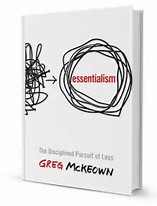 In this regard, there’s actually one book that has helped me more than any other and it’s not about writing at all. It’s called Essentialism: The Disciplined Pursuit of Less, by Greg McKeown. On the very first page, the author describes a fellow this way: “he was majoring in minor activities.” Something about that phrase jolted me to an awareness of how I was letting all the necessary, but unending details of life get in the way of what was most important to me. I was certainly one who was “majoring in minor activities,” and if I didn’t find a way to change that, my true goal of being a
  working writer would never be achieved. Did I really expect to be remembered for changing the brush head on my electric toothbrush? I’ve responded to that wake-up call with a more consistent writing schedule. If you are also struggling with this issue, I hope you find your own wake-up call–and soon!
 For poets, this phrase should be “What’s In a Title?” Poems, usually being compact expressions of a single idea, often need a title that adds to the overall thought, either adding meaning, content, clarification or setting the scene. One example of the latter is “Taking Off Emily Dickinson’s Clothes.” Sure, you see “Sonnet VIII” or other generalizations. Also titles sometime are simply the first line of the work, e.g. “Do Not Go Gentle Into That Good Night.” Then there are the titles that are perfect, yet odd, as in “This Be the Verse” which doesn’t give a clue about what is to follow. In general, most poets craft the titles of their works as carefully as the poems themselves.
 So I was both happy and dismayed when I got an acceptance for a sonnet, but with a note that the editor wanted to change the title. Yikes! I immediately began drafting in my mind a rebuttal that would show why the original title had to stay. The next day, I re-read the poem. I realized that the theme that I had wanted to convey with the title, I had not really carried through in the rest of the poem. The title turned out to be a distraction, rather than a useful adjunct to what was still a good poem. I realized that the new title in fact made the poem more accessible. This editor, like most, knew her audience, and had vetted thousands of poems. She was right and I sent off an email letting her know. As in so many cases before, skilled editors have been invaluable in improving my work.





 Lida Bushloper