
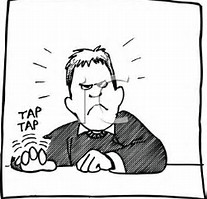
 The writing life has changed radically since the onset of electronic submissions. Mostly this is a good thing. No more trudging to the post office, weighing large envelopes so you don’t attach too much or too little postage, having to re-type manuscripts that come back damaged, or keeping a supply of various sized envelopes, for queries, manuscripts, and SASE’s. Sure, there are a few markets that still accept submissions by mail, and even a few that still insist on them. But these are rare. Another big advantage of online submissions, is that in most cases, you get an instant acknowledgement of receipt. No more wondering if the package has gotten lost in the mail. One thing, however, has not changed one whit: the waiting for a response, either an acceptance or a rejection, whether by mail or online. Some markets give a rough estimate of their response times. Others don’t. My biggest fault is impatience, and I start checking my virtual inbox within minutes after I click “send.” My impatience is out of control with other writing- related activities as well. Last week, I applied to join another online forum with restricted membership. Even with something that wouldn’t really affect my success as a writer, I checked my email obsessively until I got my acceptance one week later. I know I’m not the only one who suffers unnecessarily with raging impatience. For help, read Michael Bracken’s take on the whole impatience thing. Unless and until you can train yourself in serenity and detachment, his cure is the still the best one going.
 No one can ever really convey to another person what it’s like to: have a baby; buy your first home; retire; or write a novel. Sure, you can read about it. There’s no shortage of material devoted to helping the individual or couple embarking on one of these adventures. Sometimes, retirement or having a baby can be an unexpected development. Still, most of us have the option to choose whether or when to forge ahead. But the very fact that so many others have gone through the same experience gives us reassurance that we can succeed. And this reassurance is justified–except for writing a novel. Writing a novel is hard in a unique way. So, before you decide this is the path for you. read J.A. Allen’s blog post
 Investing can be hard. Not because of the research involved or the principles to master, although that’s hard enough. Investing is hard because you have to do it in the present while not seeing the results until the future, sometimes the far, far future. You have to have faith that efforts or sacrifices made today will ensure a better life years later. And yet, if one doesn’t take actions in the present, it’s impossible for the investment results ever to materialize. There are other life activities that follow this model. One is learning a musical instrument. Another is physical fitness. You can’t forego daily, sometimes boring, practice for years and suddenly be an accomplished musician or have physical strength and stamina. Plus, if you don’t work out or practice your instrument, your skill level actually diminishes. For writers, it’s daily writing, or as close as we can achieve, that must be practiced. If you aren’t making incremental progress on your book, it won’t suddenly appear. If you don’t practice craft, you’ll never get any better. Meanwhile, there is no guarantee that results will ensue, or when, if ever. No guarantee of a book contract or a contest win. Like with exercise, musical or physical, you simply have to have faith that it will pay off. However, physical exercise has one advantage, in that it often results in feeling better rather quickly. Even a short walk can boost one’s spirits and sense of well-being. Writing has the same advantage, at least for me. I always have the sense that every time I write, even if it’s only a page, I’m becoming a better writer. It’s my investment in the future author that I hope to be. Though I can’t recall the source or the exact quote, Woody Allen once said, “It’s the dailiness that counts.” Yes.
 I got a story turned down a few days ago. Instead of feeling the normal sting of rejection, I felt a profound relief. Truth is, it wasn’t a story I was proud of. I was, and am, very proud of the writing, of the setting and the characters. But there was always something about the story itself that never quite jelled. There were no comments attached to the rejection email, but who cares? I didn’t need them. I know in my heart that the story had a major weakness, which I could never quite pinpoint, but which was nevertheless unsettling. If I had been honest with myself from the get-go, I never would have tried to market the story. I’m grateful for all the fine editors out there who, intentionally or not, end up protecting me from myself.
 At a restaurant a few days ago, I had a side of fresh fruit with my burger. It was so refreshing, I thought I’d recreate it at home. I bought a selection of fruit at a store that’s usually pretty dependable in its produce. Everything looked appealing. I thought I knew how to judge quality. But when I made up the fruit salad it was a disappointment. The strawberries were sour, the grapes were tough-skinned and the melon was still unripe. Perhaps they were picked too soon. Some fruits will “ripen” or develop more sugar content if left out on the counter for a few days. Some never will. I have a choice: I can just throw it all out and try again. There was a time I was much poorer and wouldn’t have even considered tossing edible food. But even then I had no illusions that that the fruit would miraculously start to taste better.
 As I mentioned in my last post, I’m reading Everybody Behaves Badly: The True Story Behind Hemingway’s Masterpiece The Sun Also Rises. The author, Lesley M.M. Blume, recounts the incident when Hemingway’s wife, Hadley, gathers up all his manuscripts “including his short stories, poetry, the starter novel and all of the carbon copies of these works.” (Emphasis mine. Because that’s the most chilling part–that she took the backup copies as well as the originals.) She packs it all into a valise which then goes missing at the train station, never to be recovered. Blume goes on to say that Hemingway used the incident in a later unpublished short story.
 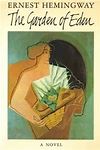 What she doesn’t say is that in a posthumously published novel, The Garden of Eden, Hemingway creates a much harsher version. In that book, the character of the wife deliberately destroys some of her writer husband’s manuscripts. Whether intentional or accidental, this sounds like a terrible thing for a writer to undergo. But both in the real life version and the fictional one, that turns out not to be the case. In the novel, the writer, David, was able to reconstruct the entire lost story from memory, and even improve it as he went. In the real life version, Hemingway “came to believe that ‘it was probably good for me to lose the early work.'” Ezra Pound’s counsel was that “memory was the best editor.”
 Once, on a job interview, one of the questions posed this dilemma: I was faced with three crises at once. How would I set priorities to address each one to avoid a disaster? I must have answered well enough because I got the job.
 I belong to several online writers’ groups. One discussion that keeps recurring is: Should you pay to enter a writing contest? I’m not talking about the obvious scams or “contests” that are no more than money makers for the “sponsors” or ways to build email lists or sell books. (
-


Sisters in Crime

Goodreads


 Lida Bushloper