The Finish Line–Not

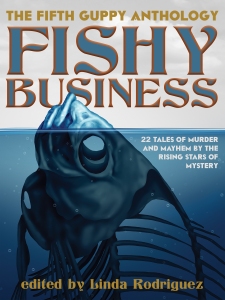
     The book is out.  Finally.  I was answering questions from a group of friends about this project.  One question was, “How long did it take?”  The glib answer is, 30 years.  But of course, that’s not what they wanted.  The more accurate question is how long from the time it actually became a viable project till the finish line.  That was more like 3 years.  But it could have been two.  Time really does get away from one.  The next question was about process.  I described briefly the multitude of drafts, the constant revision, the scrambling to create new work to make it a full volume, then the endless reading and correcting of proofs, the panic when the printer changed software, resulting in multiple mistakes on every page.  When the printer did the resizing to fit the 5″ x 8″ book format, I had to check and recheck all the places where line breaks and page breaks were now different.  The new page and line breaks would not necessarily have affected the text in a prose piece, but in poetry such details can make a great difference.  There was choosing the paper stock for both the text and the cover, plus obtaining cover art and making decisions between various versions of the design.

My friends seemed genuinely interested in all these details.  It was then that I regretted not keeping a better log of the entire process.  I was so involved in just getting the work done, that it never occurred to me to write it all down.  Perhaps I’ll be able to reconstruct the timeline, via emails and other documents.  Suffice to say it was all very, very hard work.  But I learned something from every step, from every glitch.

Through it all, I was supported by my publisher, Norma Pratt of Quesadilla Press.  This would qualify, I believe, as a “micro press.”  It’s a labor of love by Norma, and of course, by me.  Now there is more work.  Marketing, publicizing.  So, truth is, the finish line is never really crossed.

Posted in Uncategorized | 4 Comments

On Writing, Editing and Friendship

I mentioned in my last post that I had had a poem accepted by Light Quarterly.  The way I found out was by getting an author’s proof in the mail.  I could have dashed off an email, saying yeah, it’s perfect, but instead I had the great good sense to call my friend, Stephanie, an excellent writer, and even more important at that moment, an excellent editor.  Stephanie, despite being in the midst of downsizing from a house to a small apartment (did I mention she’s also an expert at de-cluttering and organizing?) rushed over that very afternoon.  By then, I had spotted what I was sure was an error in punctuation, one that despite all the times I had read this poem to various groups and individuals, I had not really seen until that moment.  I let Stephanie read the poem without mentioning my concern.  I wanted her to see it without being influenced by me.  Sure enough, the same thing that had stopped me in the middle of the poem, jumped out at her right away.

Now, we’re talking about a simple 8-line, 2 quatrain bit of light verse, not the Magna Carta.  But Stephanie and I chewed over that one change for quite a while.  Did it need to be changed at all?  If so, what would we use instead?  A dash?  a comma?  We decided that yes, it did have to be changed, and that the current period should be replaced with a semi-colon.  I sent an email to that effect later that day, and the change was acknowledged by the editor.

I have two points to make with this story.  Okay, three.  Maybe four.  First, yes, every word, every bit of punctuation, even in the smallest of efforts, does matter.  When something is going into print, you only have one chance to get it right.  Second, if at all possible, get at least a second pair of eyes on everything you submit.  I have a firm rule about this.  I have broken this firm rule.  I have regretted breaking this firm rule.  Third, no matter how many times you go over a manuscript, whether on the screen or on the page, you can still miss glaring errors.  So, edit, re-read, revise each piece as long and of often as you can, even when you’re sick of it.  Fourth, and most important, be lucky enough to have dynamic, generous, loyal, honest, patient friends.  If they are writers and editors, even better.  Stephanie takes this stuff seriously.  She places as much importance on that one bit of punctuation as I do.  The best friends provide validation as well as practical help.  I hope and believe I do the same for them, whatever challenges they are going through.

Posted in Uncategorized | 2 Comments

Hope Justified

I’ve had a poem accepted by Light Quarterly.  I couldn’t be more delighted.  You may remember from a previous post that this excellent poetry journal of light verse will likely be suspending publication, due to the death of its editor, John Mella.  Before I learned of this, I had submitted a batch of five poems to them.  When I got the news of Mella’s passing, along with the message that his associates will put out one final issue, I had assumed that they had plenty of material on hand to fill its pages, and that my work would not be needed.  So, I was happy and honored to get at least one poem into the journal before it ceased publication.  My message to myself (and anyone else who needs it):  keep trying, never lose hope.

Posted in Uncategorized | Leave a comment

Losing Control

I was reading what I thought was a poignant, even tragic poem to my writers’ group when several members started tittering, even giggling.  This was certainly not the response I was aiming for.  I can’t blame them.  I very often read humorous verse, and they have come to expect it of me, so at the first few lines, they were prepared to have a laugh.  On the other hand, one of my writer friends once was broke off in the middle of reading a chapter of her book and said to us all, “There’s nothing worse than reading something you thought was funny and nobody laughs.”  The chance of being misread or misunderstood is one of the risks writers take when they begin to read or submit their work.

Years ago, I was complaining about being misread to a brilliant English professor, Ruben Quintero.  He was the first one to tell me that, no, once it’s out there, it’s not mine anymore and I can’t control the reader’s response.  He’s right, of course.  Once something is published or submitted, you no longer have any control over how the work is viewed, or the response it gets.  It’s a scary, daunting thought.

But it can also be a delightful experience.  Nothing makes me happier than when I read a poem to one of my groups, and it engenders a lively discussion, not necessarily about the poem, indicating it has hit a nerve, or made the listeners thoughtful, or led them to see something in a different light.  But even more delightful is when they come up with ideas, associations, or interpretations that I had not thought of myself, which had not occurred to me during the writing, but which prove the work is richer than even I thought.  If I had control over all responses, the readers would miss out on the wonderful joy of discovering their own meanings in the work and I would lose out on the opportunity to touch and affect readers in new ways.

In a workshop type setting, of course, we writers listen to all responses, even if they are not what we had expected or intended, negative or positive.  There is one negative response to be wary of, however.  Some listeners see their own negative response as a sign that the poem “doesn’t work.”  This is not necessarily true at all, of course.  That reaction may be only one, single response amidst a chorus of positive ones.  Not every poem is going to work for every reader.  But one thing is certain:  your work has no chance for any response at all if it’s not presented, read or submitted.   It takes guts, but in my opinion, it’s worth the risk of losing control.

Posted in Uncategorized | Leave a comment

Sign Me Up

Audio books and e-readers are wonderful.  I’m hooked on print as well, of course.  But what I really need is some kind of connection, preferably wireless, that allows me to download books directly into my brain.  The constant flood of excellent, intriguing, thought-provoking, entertaining writing is overwhelming, at the same time that it is a source of endless joy.  I was at my local independent bookstore last evening.  I always buy something, otherwise how would they stay in business?  But I can’t afford to buy every title I want, so for many of them I note down the titles and authors and add them to my library desiderata list.  My hometown library allows patrons to keep in their online accounts a list of library-owned books to read.  But they limit the list to 100 titles.  It’s a good thing they do, as mine would be ridiculously out of control.  However, while at the bookstore, I don’t just browse the display tables and shelves for new reading.  I also pick up the latest brochure, called “Indiebound“, put out by the American Booksellers Association.  It always points me to additional books to seek outBut yesterday’s trip just piled it on.  I discovered a relatively new journal called The Coffin Factory.  The subtitle is “The Magazine For People Who Love Books.”  It seemed appropriate for me.  In Issue Three, there is an interview with Judith Gurewich, the publisher of Other Press.  Here was another irresistible introduction to many books I would not otherwise have discovered.  (Maybe if I get a library card under an assumed name, I can get going on my next 100-item elist of wanted library books.  I wonder if this would be illegal.)  But, there’s more.  While at the bookstore, which has an excellent periodicals section, I picked up the latest issue of the marvelous literary journal, Tin House.  My favorite recurring section of Tin House is called “Lost and Found.”  Here, well-known writers revisit well- or lesser-known books from the past that still deserve to be read or discovered for the first time by those who either missed them or maybe weren’t even born when they were first published.  Without fail, I find at least one enticing new lead.

So, while publishing seems to be thriving in all its forms (I’m delighted to say), I can’t pick and choose from the wealth of offerings.  I want to consume them all.  So, whenever you (whoever you are) get that direct download of books to the brain up and running, I’m ready to sign up for beta testing.


Posted in Uncategorized | Leave a comment

We Lost Another Good One

I was sad last week to hear of the death of John Mella, the founding editor of Light Quarterly.  The fate of this journal of light, humorous and fanciful verse, the only one of its kind in the U.S., is in doubt, but current comments on their web site indicate that the members of the foundation responsible for its publication will produce only one additional issue.  In one blow we’ve lost a great market for light verse as well as a staunch supporter of the genre who was faithful in diseminating the best work of the best poets in this style, as well as reviews and commentary.  I did not know Mr. Mella personally, but I will miss him and his work.

Posted in Uncategorized | Leave a comment

No and Yes

I wrote in the last post about meeting Belinda Del Pasco, the marvelous artist and human being.  When I meet someone who seems to be successful at what they do, I fall into “interviewer” mode, also known as brain-picking.  I asked Belinda how many hours a day she worked at her art.  Her answer was 10-15!  (Hope I got this right, Belinda.)  My first reaction was a gulp of dismay.  Then a jolt of reality.  No wonder she’s so successful.  And no wonder I’m not.  I was reminded of the “10,000-hour rule” which postulates that much success in any field can be attributed to the sheer number of hours one expends on the job, game or skill.  For an enlightening discussion of this idea, see Malcolm Gladwell’s book Outliers.  Belinda did go on to qualify her answer a bit, saying that a lot depends on the type of task she is performing and that for some tasks, she is not able to maintain that level of work, but when she is in “flow” the hours disappear.  It gave me a lot to think about, and of course, some of those thoughts were self-critical.

But the next morning I realized I was making a mistake.  One trap writers and perhaps others fall into, is comparing ourselves to others.  We look at our fellow writers and see those who are more successful, more productive, more prolific, more popular, more confident or making more money.  I have writer friends who somehow always have the next speaking engagement lined up or seem to have an inside track on finding receptive markets.  It’s all too tempting to try to find out what they are doing and then try to write what they are writing or do what they are doing.  But I can’t and it probably wouldn’t work anyway.  I am the writer I am, and must continue to be, wherever that leads me and however much or little success it generates.  On the other hand, I know I could do more.  I could spend less time reading the millions of books I want to read, less time playing word games, less time socializing with friends.  (Well, that one would be the hardest.)  I could spend a bit more time piling up those hours, and making sure they were spent in actual writing, not shuffling papers or dreaming of success.

So, I counsel myself, No, resist the trap of comparing myself to others.  But, Yes, give more thought and significance to the “10,000-hour” rule.

Posted in Uncategorized | Leave a comment

This past weekend, I was lucky enough to visit the Sierra Madre (Ca.) Art Fair, which supports the Sierra Madre Public Library.  I met there a marvelous artist, Belinda Del Pesco.  My friends and I were struck by the quality of her art.  But I was even more amazed by her generosity.  She is completely open about her process of creation, completely willing to share encouragement and practical advice, in my case about how to improve my still infant blog.  I was impressed by her ability to articulate the methods by which she produces such fine work.

I wrote in an earlier post about the dreaded “dry spells” we writers sometimes face, and that one way of both surviving them and also stimulating our work back into action, is to get exposure to other artists and art forms, especially excellent examples.  I mentioned plays and music, but Belinda and her art are exactly the kind of thing I meant.  It’s also one more example of how being part of a community of artists promotes one’s own work and creativity.  Visit Belinda on her website belindadelpesco.com or blog belindadelpesco.blogspot.com.

Posted on by Lida Bushloper | 1 Comment

One of my commenters alerted me to a Bukowski poem which I had not read before.  The poem was about writing poetry.  Writers are often at their best when writing about writing, about the conflicts, the fears and the decidedly unglamorous hard work and lack of recognition.  I’m reminded of some of my favorite novels about writing and the writing life.

For raw emotion, and for a treatment of the eternal struggles of writers (finances, relationships, qualms about selling out) you can’t beat George Gissing’s New Grub Street, first published in 1908.  For the unvarnished, stark reality of the writing life, read Martin Eden, by Jack London.  There has been speculation that the initials of the title character, M.E., meant “me,” referring to London himself.  I loved Elise Blackwell’s 2007 undating of the Gissing book, simply called Grub.  The Garden of Eden, by Ernest Hemingway conveys some idea of what it means to be a writer.  The Bestseller, by the late Olivia Goldsmith, while more about publishing than about writing, is illuminating and fast-paced.  Of course, there are many more.

These books already qualify as excellent novels, but the content about the writing life hits home, sometimes painfully, for those of us who have chosen to follow this path.

Posted on by Lida Bushloper | Leave a comment

Drought Tolerance

I won’t call it writer’s block.  When you’re just starting out that may be what it feels like. But I’ve been through these over the years, and somehow (I’m not sure how or why), at some point, I get new ideas and enthusiasm.  I just call the fallow times in between dry spells.  For me, the important thing is not to panic, and also to continue with writing related activities.  That’s one of the reasons I read poetry during these periods.  It makes me feel connected and not infrequently generates my own new work.  I fill my life if possible with other art forms, especially music and plays.  I try to build in new experiences and meet new people.  I try to give myself alone time to ponder.  I think this is part of what Julia Cameron calls “filling the well.” 

During one long spell, when it took me 10 years to finish a short story, which eventually got published, I leaned heavily on The Artist’s Way.  Most of you will be familiar with the Julia Cameron book.  Even though I was mentally and emotionally drained by work and personal stresses, doing the morning pages at least made me feel like I was still writing something, still somehow staying connected to my goals.  I couldn’t allow myself to give up, no matter how badly things seem to be going. 

It helps to have or cultivate faith and acceptance.  No point in railing against the current reality.  I used to worry because I was convinced I’d never have another idea.  Never produce another piece of work.  I’m no scientist, but in my experience panic, tension and stress hamper creativity, not to mention wrecking our enjoyment of the other parts of our lives.  Of course, it’s easier said than done to reduce tension and stress when you’re in the thick of whatever is causing them.  And fallow periods can be the result of other conditions, many of which we may not even be aware of.  Entire books, and dozens of magazine articles have been written about the causes of “blocks” and possible remedies.  Typing “writer’s block” into your search engine produces plenty of suggestions.  They may help or they may not.  Each writer has to find out what works for herself.  Until then, work on developing “drought tolerance.”   

Posted in Uncategorized | Leave a comment