
 I’ve never confessed this to anyone–until now. Decades ago, I borrowed a book from a friend. She was adamant that she wanted it back. She even wrote her name, address and phone number inside the front cover. Yet, I never returned it. Never. I’ve been wracked with guilt ever since. Why didn’t I return it? I never got around to reading it. As more and more time went by, I got more and more embarrassed about how much time had gone by. We lost touch. Then I moved away, packing the book up with all my other stuff. Wanting to avoid any recurrence of that guilt is one of the reasons I rarely borrow books from other people. Only from libraries. Another reason is the sense of obligation I feel as soon as the book is in my hands, the sense that I must read this book and no other, just so I can hurry it back to its owner. I’m not comfortable with the weight of that burden. I’m also afraid I’ll damage it. Once I borrowed a mystery from a friend. Brand new hardback with a dust jacket. I read it right away without any mishaps. But, just as I was putting it in the car to return to her, I accidentally put the tiniest tear in the dust jacket. I felt awful. She, of course, was forgiving. But I was full of chagrin. She had entrusted me with this possession, and here’s how I treated it. Yes, I know I’m a bit extreme about this, but because I am, it’s safer for me not to take the chance.
On the other hand, if I lend a book, it’s never really a lend. Since I know there’s a good chance I won’t get it back, I let it go. Even if I haven’t read it yet, I say, “oh, just take it. Don’t worry about giving it back.” I don’t want that burden myself, so I won’t obligate anyone else. If it’s something I must keep, I won’t lend it in the first place. And when I do borrow, I try to be very clear. “Do you want this back?” I give myself a two-week time limit. Read or return. No exceptions. No guilt. And no more packing up and leaving town with other people’s books.
 Sometimes I just get burnt out. Or stuck. Or bored. With my writing, I mean. My projects are bogged down, I don’t know how to fix problems, the original idea seems lame. Writing is not fun. Well, of course not. Writing is hard. So you have to have some spark of interest if you’re gonna keep doing it. How do you get that? Or how do you get it back, since we’ve all had it at one time, else we wouldn’t be doing this at all.
 We writers know all about keeping quiet about our work, or at least our works in progress. We know that talking about them too soon discharges the energy and excitement we need to keep pressing on till we at least finish the first draft. But lately, I’ve come to realize there other reasons for shutting up, even when, or especially when, non-writers ask us how our work is going. These people mean well, of course. And at least they ask, which often is not the case. Still, it can be a disheartening experience. A few of the most egregious responses go like this:
 I mentioned a while back that I had a story accepted for an upcoming anthology. So far, so good. Then the editor sent to all the contributors her comments and suggestions for improvements, fixes and edits. I was pleased that she only had three minor issues with my manuscript. It should have been simple and quick to address them. But it wasn’t. What should have taken a few days, even hours, took weeks. Why was it so hard? When the coordinator sent around reminders for the deadline for the edits, some of the other contributors sent group emails saying things like “oh, I did them right away and sent them right back.” What did they know that I didn’t? Okay, a couple of them were far more accomplished writers than I am, so maybe because of their greater experience it was easier for them. But, still, it seemed like I was having more trouble than I should have. I finally got them done, and several days before the deadline. But what could I learn to make it smoother next time? One thing I realized was that I had worked long and hard on this story. I had worked so hard, made everything as perfect as I could. I had had critiques and beta readers. Had done revision after revision. I had gotten the story as perfect as I could make it. Therefore, when I saw the editors suggestions, it was hard for me to see how the story could possibly be made better. It was already as perfect as I was capable of making it. So, for the first few days, I gave up. But of course, I couldn’t let that situation stand. Another thing: I had lived with the story for so long, every word seemed firmly stuck in place. I had a hard time seeing the words any other way. They were frozen in my consciousness just the way they were. It was like they existed already in some eternal universe of fiction, never to be changed. The third issue, and by far the hardest to conquer, was that once given the chance, the temptation to make a boatload of other changes–meaning what I thought were “improvements,” was hard to resist. This sounds like it contradicts what I said earlier about the story seeming perfect. But what I was now looking at were changes that I wanted, not ones the editor had requested. However, I feared that in making those changes, I would only open myself up to more negative feedback from the editor. So I resisted the urge.
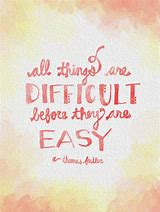 Finally I was able to buckle down. I picked what I thought was the easiest thing to fix. Turned out it wasn’t, but I had to start somewhere. One item turned out to be easier than I thought. I realized I could just delete the offending sentence, without any loss of meaning. After the three changes were made, naturally, I re-read the whole piece obsessively, before sending it off. It was a relief. Also, I do believe that the exercise will help me become a better editor, whether on my own, or in response to change requests from other editors in the future. I read a quote recently that applies. “Progress is in the pursuit.” Yep.
 In my last
  And it’s not just book clubs, although those are many and active. (Turns out some are just excuses to get together, have dinner and drink wine. Nothing wrong with that, either!) One of the first things people often do when visiting someone else’s home for the first time is scan their bookshelves to see what they read. Then you say, “oh, hey, I read that. What did you think?” Or, “I was thinking about reading this. Is it worth it?” Most people liked to be asked their opinions. A conversation blooms. We bond over the contents, but also the activity itself. I’ve been known to interrupt people reading alone in a restaurant to ask how they liked that particular book. I try to be selective, but most people I’ve approached have been pleased to have a short chat and share their responses, to add other titles and to ask me for ideas. Then we both go our own ways, after having those few moments of human connection. When meeting someone new, if you have nothing else in common, you can almost always find some book to mention.
 More specifically, why read books? Why do I even ask this? If you follow this blog, you’re likely an avid reader, of darn near everything. I still want to offer some reasons. For information, of course. For entertainment, naturally. But also:
 I had some minor eye surgery a few weeks ago. Pre-op and post-op instructions were clear, manageable and complete. No driving, bending. lifting anything over 20 pounds, all the usual stuff. But there was one HUUUGE exception. They didn’t tell me I wouldn’t be allowed to read for 24 hours. Or work on the computer. They told me this only AFTERWARDS. Why on earth would they not mention something so crucial? At least crucial to me. They probably had no idea they were dealing with someone who has a reading addiction. There was nothing like that on the pre-op questionnaire. Some of my friends didn’t get why I was so devastated. I could still watch TV, right? And it’s only for 24 hours. Easy for them to say. Look, if I’m alone and unoccupied, it’s hard for me to go 24 minutes without access to something to read. I’m the kind of person who ALWAYS has something to read. You know, just in case. Just in case the doctor is running late. Just in case traffic is light and I get where I’m going way early. Just in case I have, for whatever reason, a few minutes to kill. If I don’t need it, so what? Carrying a small book, magazine, or an e-book is a minor extra in my tote bag. If I forget to bring something, I start to fret. I read while waiting for the previews to start at the movies. I read during commercial breaks on TV. (Okay, maybe I’m a little cuckoo.)
 On someone else’s blog a few days ago, a commenter said he wanted to re-blog the post, but didn’t know how. He went on to say that that would be his new goal, to learn how to do that–in effect, to learn a new skill. That’s so often one of my goals also, to learn how to do something new or different, with my blog, but also in other areas of life. Could be on the piano, in word processing, or house-keeping. Life hacks really do make a difference.
 I wrote a short story. It’s a pretty far out fantasy, not what I normally do. Okay, it’s weird. But it’s a story I had to write. Now, where can I possibly place it? I tried a couple of markets that pride themselves on publishing cutting edge or experimental fiction. No luck. This story means a lot to me, so I keep trying. I recently saw another market that looked like a possibility. The guidelines actually add, at the end, “Don’t Reject Yourself.” I would have submitted it anyway, based on the journal’s guidelines, but the fact that they added this phrase gave me the final push to do it.
 Years ago, I read






 Lida Bushloper